Categories
Alphablocks Research Lab Annual Research Report Early Years Education Pre-School Learning Research on Early Years Development

Alphablocks Research Lab: 2025 Report

Executive Summary

In 2025, Alphablocks Research Lab continued its mission to advance the science of child development and mental health.

This year, the lab focused on how early environments influence learning and mental health throughout development, from childhood to adolescence. Using large-scale data from population cohorts, longitudinal surveys, and neuroimaging scans, our work examined how social safety, parenting, inequality, cognition, and digital environments influence children’s development.

Below we summarise this year’s research by theme.

2025 in Review

  • Celebrating 10 Years!
  • New site in Hadley Wood – now in its 2nd year.
  • Twice Rated “Outstanding” by Ofsted (2018, 2024).
  • BBC-Pearson Early Years Team of the Year (2025).
  • New Projects by Alphablocks Research Lab.
Categories
Books for children Cockfosters Nursery Early Mathematics Early Years Education Early Years Foundation Stage Hadley Wood Nursery Support learning at home

Supporting Your Child’s Reception Journey: A Guide for Parents

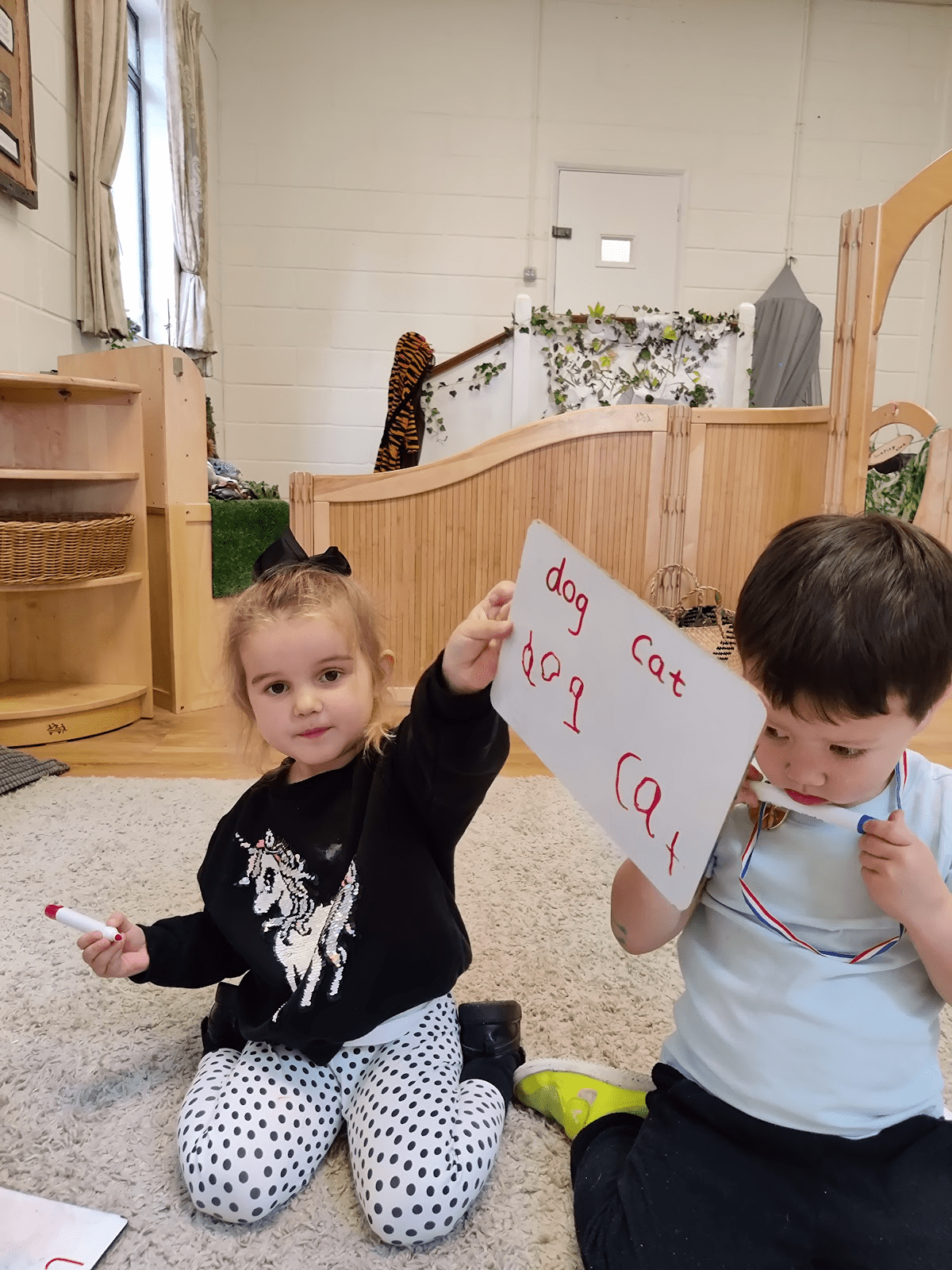
A young girl holding a whiteboard with the words 'dog' and 'cat' written on it, while a boy beside her is focused on his own task. They are in a classroom environment, engaged in learning activities.

The Reception year is a pivotal time in every child’s educational journey. It builds on the Early Years Foundation Stage (EYFS) framework and marks the transition to more structured learning. As a parent, understanding what’s expected during this year can help you prepare your child for success, emotionally, socially, and academically.

To help parents feel more confident and well-informed, a fantastic new resource, Starting Reception, offers clear guidance on what to expect and how to support your child during this exciting transition. Here is an outline of the key areas of development aligned with that guidance:

Categories
Alphablocks Research Lab Early Years Education Early Years Foundation Stage Pre-School Learning Research on Early Years Development

Infant Motor Skills and Adolescent Personality

A new study published in the Journal of Personality identifies how early psychomotor development is associated with personality later in life through childhood cognition, self-regulation, and social competence. Drawing on data from over 9,000 children from the United Kingdom, the research explores the long-term pathways linking infants’ motor and communicative functions to personality traits in late adolescence.

Categories
Alphablocks Research Lab Annual Research Report Early Years Education Ofsted outstanding Pre-School Learning Research on Early Years Development

Alphablocks Research Lab: 2024 Report

Executive Summary

Alphablocks Nursery School is committed to providing outstanding early years education and empowering children to become confident learners. Now in its second year (2024), our research organisation, Alphablocks Research Lab, contributed to a better understanding of how children develop cognitive and social skills, as well as how we can support the mental health of children and adolescents. This report summarises the year’s achievements and highlights how our findings can shape educational practice in our nursery school and beyond.

In brief, this year the lab focused its efforts on projects that examined language skills, prosocial behaviour, and the broader environmental and psychological factors impacting child development. In doing so, we aimed to provide evidence-based strategies for educators, parents, and policymakers.

Categories
Alphablocks Research Lab Early Years Education Pre-School Learning Reggio Emilia Support learning at home

The co-development of spatial ability and emotion regulation in children: implications for early years education

At Alphablocks Research Lab, we are dedicated to advancing our understanding of early childhood learning and development. We are excited to share insights from our latest study, “Feeling the Distance: The Relationship Between Emotion Regulation and Spatial Ability in Childhood,” recently published in the leading journal Development and Psychopathology. This collaborative research by Prof. Eirini Flouri of the UCL Institute of Education and our Director, Dr Dimitris Tsomokos, sheds new light on how children’s spatial skills intertwine with their ability to regulate emotions, and vice versa. In this post, we describe the main findings of this study and discuss their implications for early years education.