

Starting nursery, returning to nursery after a break in attendance, or moving into a new classroom are all big events in the lives of young children. Our All About Me theme gives children time and space to feel secure, develop a sense of belonging and celebrate what makes each child unique.
Across both our Explorers (18 months to around 2½ years) and Adventurers (2½ to 3 years and older) classrooms, children explore this theme through stories, sensory play, outdoor exploration, songs and rhymes, physical activities and creative experiences, alongside the everyday routines that help them feel settled.
As new children begin their nursery journey, All About Me helps them become familiar with their new environment, new adults and peers. For children already familiar with nursery life, the theme allows them to build on what they already know, develop greater independence and deepen their understanding of themselves and others.
Who Am I?
All About Me encourages children to discover more about themselves by exploring:
- Their name and recognising themselves.
- Different parts of their body.
- Their likes, dislikes and interests.
- Their feelings and emotions.
- Their individual strengths and abilities.
- What they can do independently.
- Similarities and differences between themselves and others.
All About My Family
Families are an important part of a child’s identity. Children can explore the people who are special to them through family photographs, books, role play, conversations and creative activities.
At Alphablocks Nursery School, we celebrate that every family is unique, and we value different family structures, cultures, languages, traditions and experiences.
For younger children in Explorers, recognising a familiar family member in a photograph can provide comfort and encourage communication.
For our Adventurers, children can develop their understanding by talking about their families, comparing experiences and recognising that families may be different, while sharing the same importance and warm, caring and loving relationships.

The Importance of the Key Person During Settling In
The key-person approach is particularly important when children first join nursery. For a new child, their key person – one of our Early Years Teachers – becomes a familiar and reassuring adult who helps them feel safe and secure. The key person (also called the key teacher) gets to know the child’s routines, interests, comfort needs, communication style, and personality. During settling in, the key person will:
- Welcome the child warmly.
- Offer reassurance when they become upset.
- Gradually introduce the child to the nursery environment and other adults.
- Follow the child’s interests to encourage exploration.
- Work with parents to understand each child’s needs.
- Provide a secure base from which the child can explore.
- Recognise and respond to the child’s individual cues, for example, what may upset them or which foods they enjoy or dislike.
- Celebrate small steps towards independence.
For our Explorers, this may mean helping a child move gradually from staying close to their parent or key person towards confidently exploring the room.
For our Adventurers, settling in may involve supporting children to develop confidence in a new environment, make friends, understand routines and become increasingly independent.
It is completely natural for a child to stay close to their key person at first. As their confidence grows, they may begin to move further away, play with resources and interact with other children, returning to their key person when they need reassurance.
Working in Partnership with Parents
A positive relationship between parents/carers and our teachers can make the settling-in process much smoother. Parents know their children best. Information shared with us about a child’s routines, interests, favourite songs, comfort items, words, foods, family and ways of communicating helps our teachers understand the child from the very beginning.
Parents can support the process by:
- Sharing information about their child’s personality and routines.
- Telling us about words, gestures or phrases their child uses at home.
- Sharing information about comforters and familiar routines.
- Talking positively about nursery at home.
- Keeping goodbyes calm, short and consistent, and always saying goodbye rather than slipping away.
- Sharing photographs or experiences from home.
- Communicating openly with the key person about how their child is settling.
For children settling into Adventurers, parents can also share information about their child’s friendships, interests, independence and experiences outside nursery, helping our teachers build meaningful connections with what children already know.
At Alphablocks, we share observations, achievements and moments of progress with parents, helping families see how their child is developing confidence, building relationships and becoming more independent at nursery.
Learning Across the EYFS
The EYFS (Early Years Foundation Stage) is the framework that all early years settings in England follow for children from birth to five. It is made up of three prime areas and four specific areas of learning and development, and All About Me provides rich opportunities across all seven.
Prime areas
Personal, Social and Emotional Development: Helps children develop identity, confidence, relationships, emotional awareness, resilience and independence – for example, talking about how characters in a story might feel, or sharing something about themselves at group time.
Communication and Language: Supports children’s vocabulary, listening skills, conversations and confidence in communicating their needs, experiences and ideas, including learning words for parts of the body, feelings and family members.
Physical Development: Encourages children to explore what their bodies can do while developing coordination, balance, fine motor skills and independence, through action songs and rhymes, movement games and everyday tasks such as washing hands or putting on coats.
Specific areas
Literacy: Children can enjoy stories about families, share photobooks about themselves and their families, identify emotions and begin to share their own experiences through marks and early writing.
Mathematics: Children explore number, size, shape, pattern, comparison and positional language through meaningful experiences and play, such as comparing the sizes of their hands and feet or counting the people in their families.
Understanding the World: Children learn about each other’s families, homes, cultures, communities, senses and the world around them. It is also an opportunity for parents to come in and share these experiences with the children at nursery.
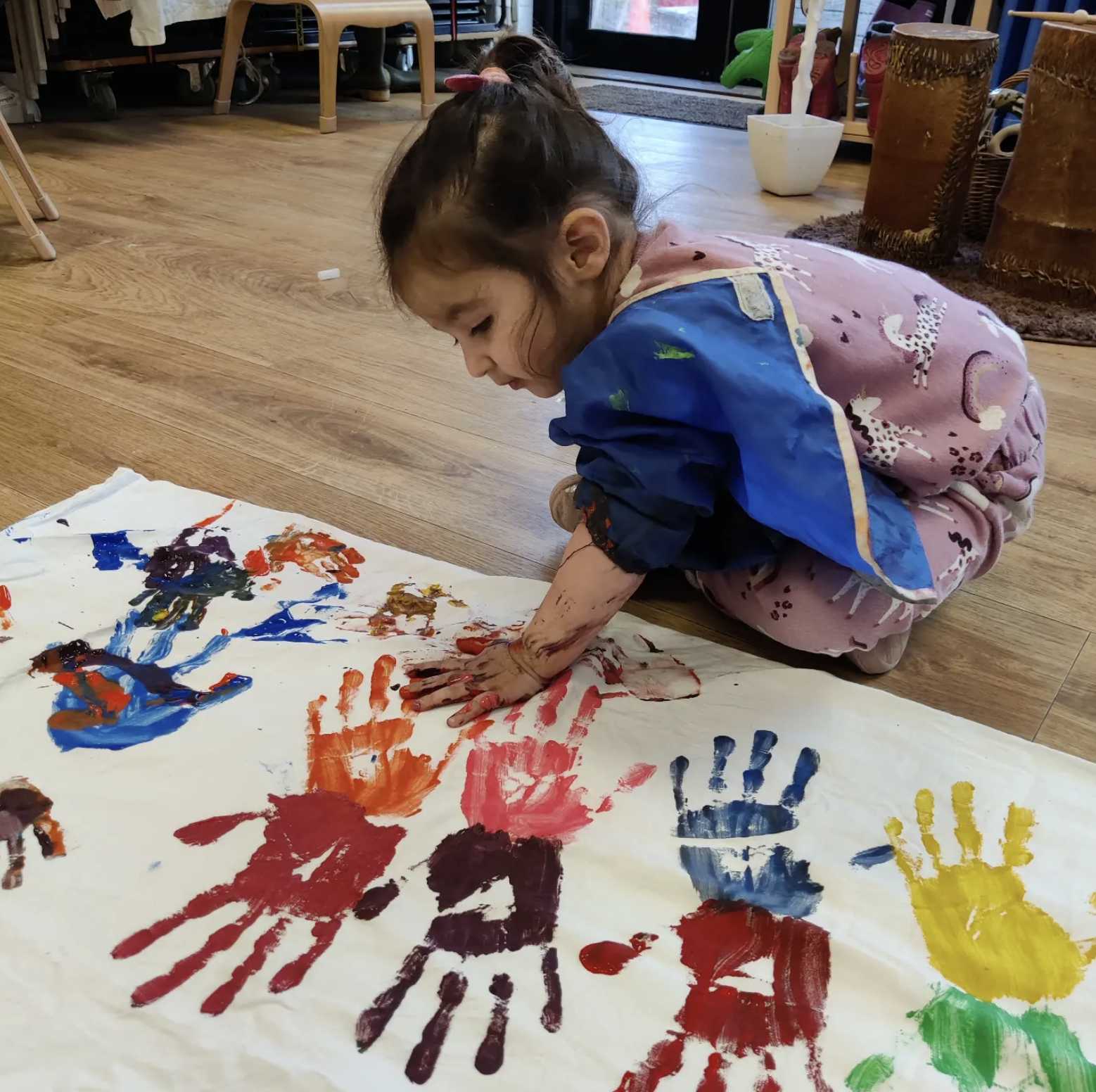
Expressive Arts and Design: Children express themselves through art, music, movement, dance, role play, storytelling and imaginative play, including self-portraits and handprint pictures.
All About Me at Home
A few simple ideas to continue the theme at home:
- Make a family photobook. A handful of printed photos of the people, pets and places that matter to your child, in a small album or simply stapled together, is lovely to look through together. Your child is welcome to bring it in to share with their key person.
- Talk about feelings during stories. Pause to wonder how a character might be feeling, and name feelings as they come up in everyday life, such as “You look excited” or “I think you feel a bit cross.”
- Notice what your child can do. Give them time to try small things on their own, such as putting on their shoes or choosing between two snacks, and tell them what you noticed.
Creating a Sense of Belonging
Through All About Me, we help every child feel proud of who they are and where they come from. Children have the opportunity to tell us about the people who matter most to them, and they learn that they are safe with us and that their voice matters. This helps them to explore, play and learn confidently and happily.
Research featured in our Alphablocks Research Lab 2025 Report followed more than 8,500 children in the UK Millennium Cohort Study. Children who experienced more warmth from their primary caregiver at age 3 perceived their social world as safer at age 14, and this in turn was linked to better mental and physical health at age 17 (JAMA Psychiatry, 2025). The study looked at warmth at home, and it is one of the reasons we give so much attention to warm, sensitive and responsive relationships at nursery too.
Whether a child is new to our Explorers class, progressing through Explorers or beginning their Adventurers journey, we want every child to feel valued, accepted and to boost their sense of belonging.
If you have any questions about how your child is settling, please speak to your child’s key person. By working closely with you and providing warm, responsive relationships through our key-person approach, we aim to make transitions and settling in as positive as possible, and to help every child settle, belong, grow and thrive.